Address
304 North Cardinal
St. Dorchester Center, MA 02124
Work Hours
Monday to Friday: 7AM - 7PM
Weekend: 10AM - 5PM
Address
304 North Cardinal
St. Dorchester Center, MA 02124
Work Hours
Monday to Friday: 7AM - 7PM
Weekend: 10AM - 5PM

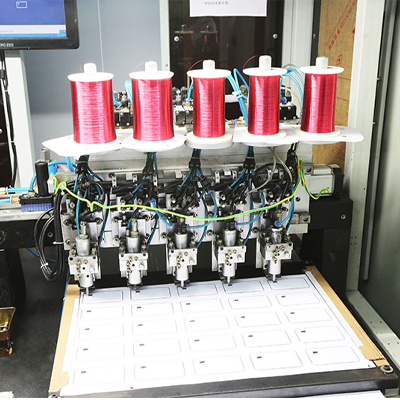
With the rapid development of the Internet of Things (IoT) and smart manufacturing, UHF RFID (ultra-high frequency radio frequency identification) technology, with its advantages of long-range identification and high-speed reading, has become a vital tool for modern automated management and logistics tracking. This article will comprehensively introduce the technical characteristics, application scenarios, and future development trends of UHF RFID, helping companies gain a deeper understanding of the enormous potential of this innovative technology.
What is UHF RFID?
UHF RFID is an automatic identification technology that utilizes ultra-high frequency (UHF) bands (typically between 860 MHz and 960 MHz) for wireless communication. Compared with low-frequency (LF) and high-frequency (HF) RFID, UHF RFID offers a longer read range (typically several to over ten meters) and faster read/write speeds, making it suitable for high-volume, rapid identification.
A UHF RFID system primarily consists of three components: a tag, a reader, and a data processing system. The tag contains a built-in antenna and chip that store unique identification information. The reader transmits radio frequency signals to activate the tag and read the information. The data system is responsible for analyzing and managing the collected information.
Core Advantages of UHF RFID:
Long-Range Identification: UHF RFID can reliably read tag information at a relatively long distance (typically 3-10 meters), significantly improving the efficiency of warehousing, logistics, and asset management.
High-Speed Batch Reading: It supports simultaneous reading of large numbers of tags, making it ideal for scenarios requiring rapid inventory and tracking.
Contactless, Line-of-Sight-Required: Tags can be identified without being directly exposed or aligned with the reader, providing flexible and convenient operation.
Low-Cost Tags: The production cost of UHF tags continues to decrease, making them suitable for large-scale applications.
Typical Applications of UHF RFID:
Logistics and Supply Chain Management: Using UHF RFID enables automatic identification and tracking of goods, reducing manual errors and improving transportation and inventory transparency.
Warehouse Management: Rapid inventory counting, real-time visibility into goods status, and improved warehouse operational efficiency.
Asset Tracking: Monitor the location of equipment and critical assets to prevent loss and theft.
Retail Anti-theft and Smart Payment: Combined with smart shelves and self-checkout systems, it enables unmanned retail and anti-theft management.
Manufacturing Automation
Production lines track the flow of parts, enabling precise production control and quality management.
Future Development Trends
With the continuous optimization of chip technology and antenna design, UHF RFID tags will become increasingly miniaturized and intelligent, even possessing environmental sensing and data collection capabilities. Furthermore, the integration of 5G networks and big data technologies will further enhance the real-time data processing capabilities and application depth of UHF RFID systems, driving the digital transformation of smart cities, smart factories, and supply chains.
